A Tribute to the Giants of Czech Music
The Symbiosis of Winds and Organ
Sunday, 13. 10. 2024 at 16:00
Church of St. Nicholas
Röschitz
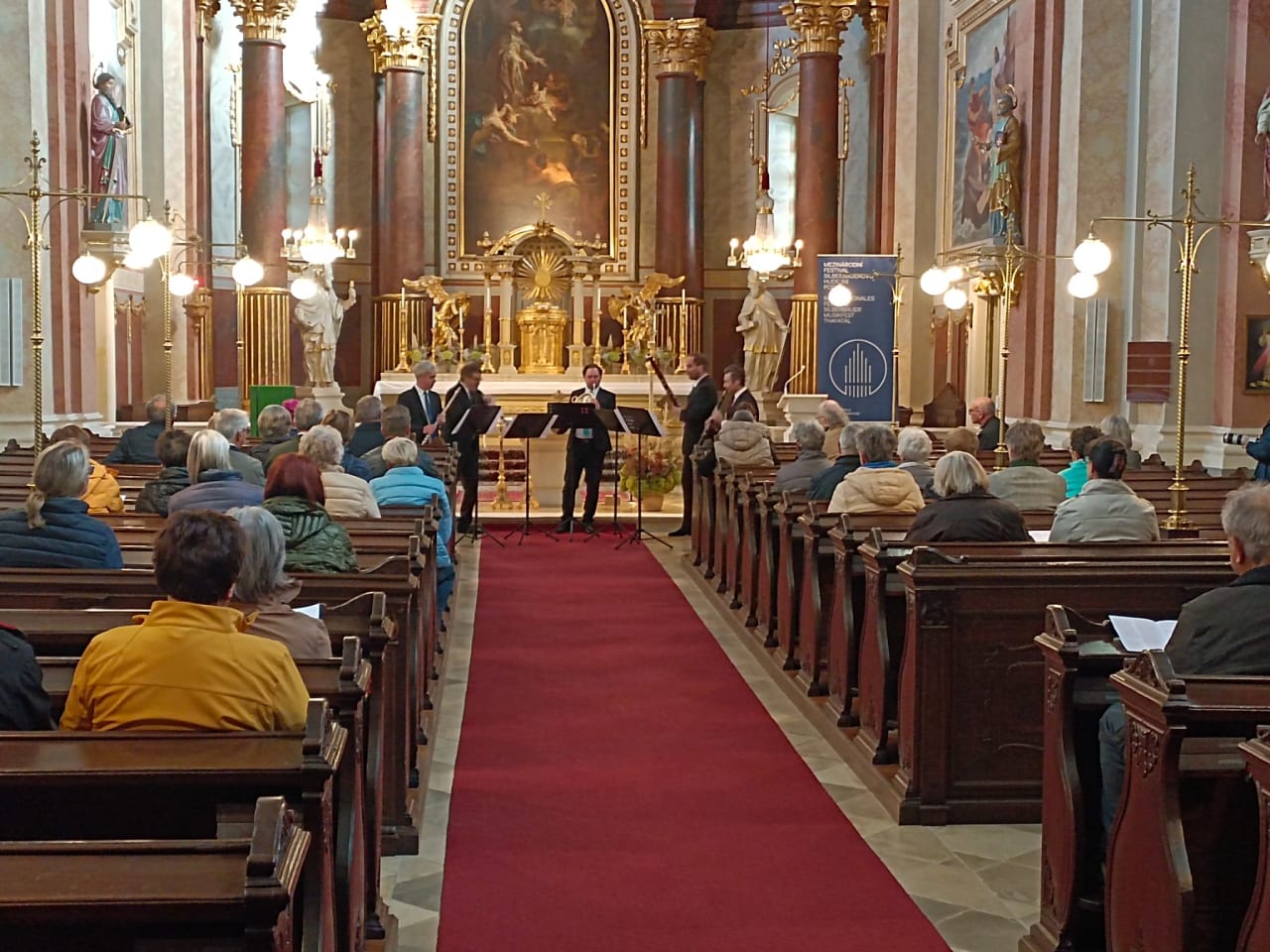
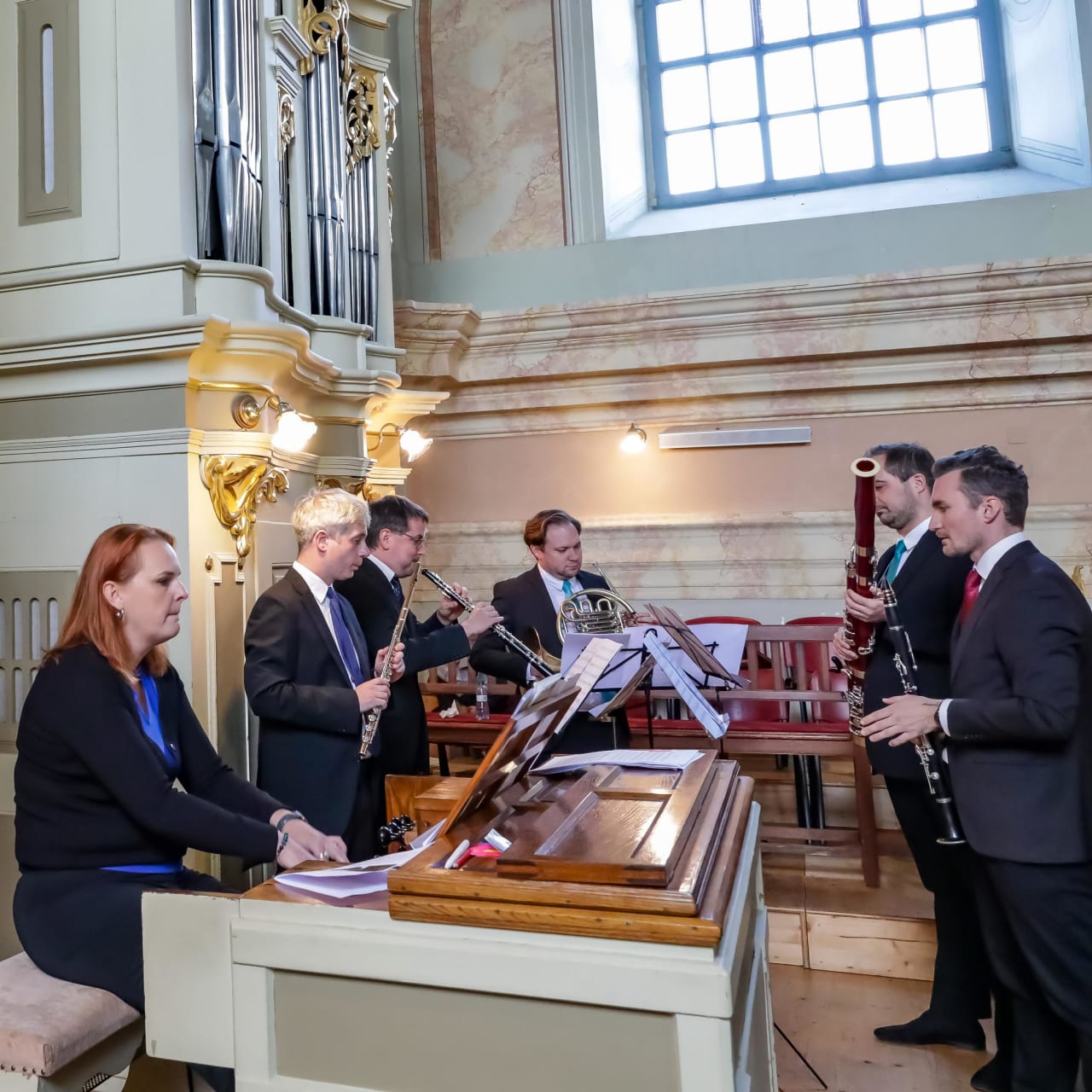
The programme includes works by Alexander Zemlinsky (1871–1942), Leoš Janáček (1854–1928), Antonín Dvořák (1841–1904), Robert Fuchs (b. 1972), and Lukáš Sommer (b. 1984). The concert will feature Dvořák’s Preludes for organ, a suite from Janáček’s opera “The Cunning Little Vixen”, and Dvořák’s String Quartet Op. 96 “American” arranged for wind quintet.
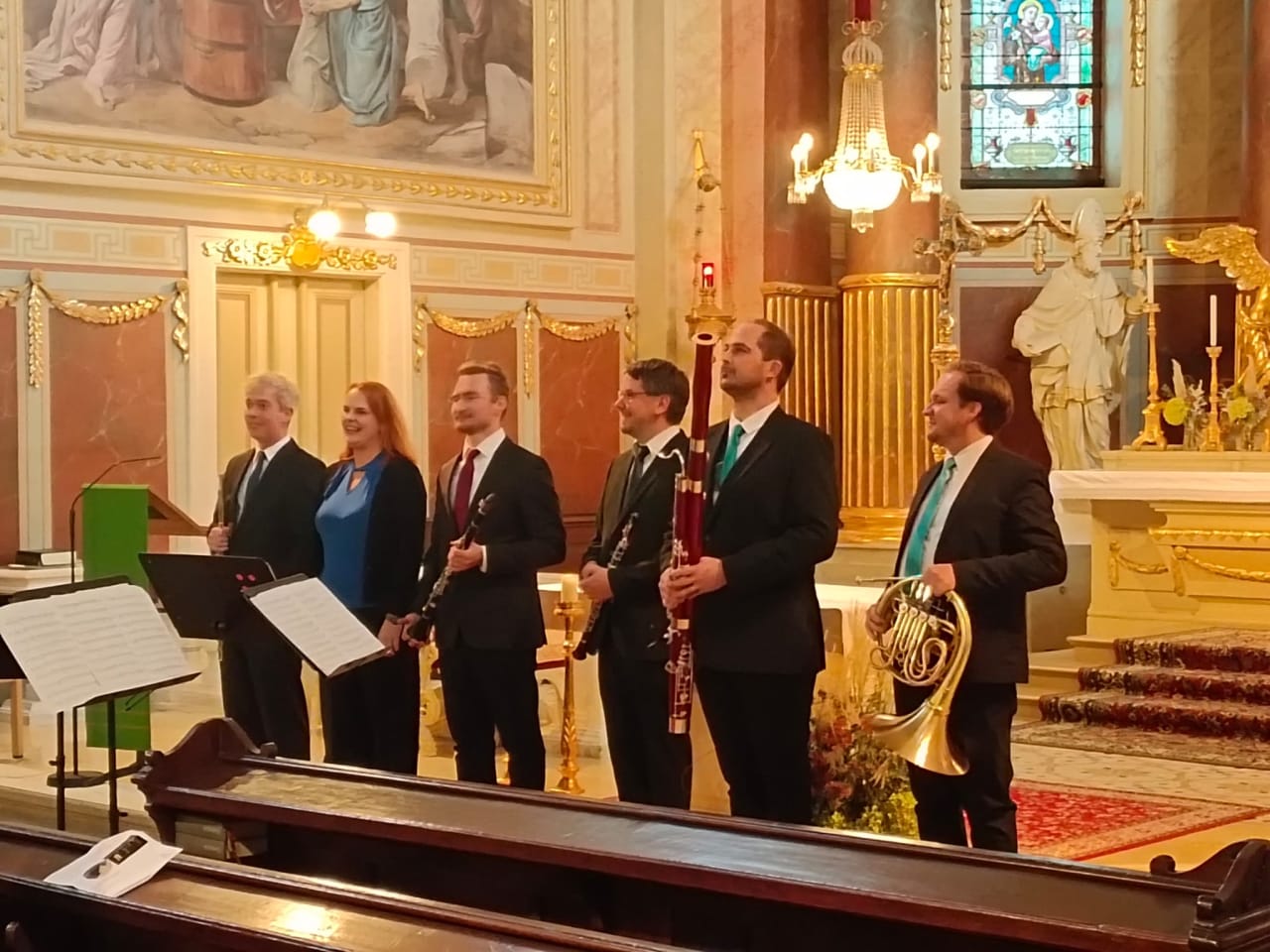
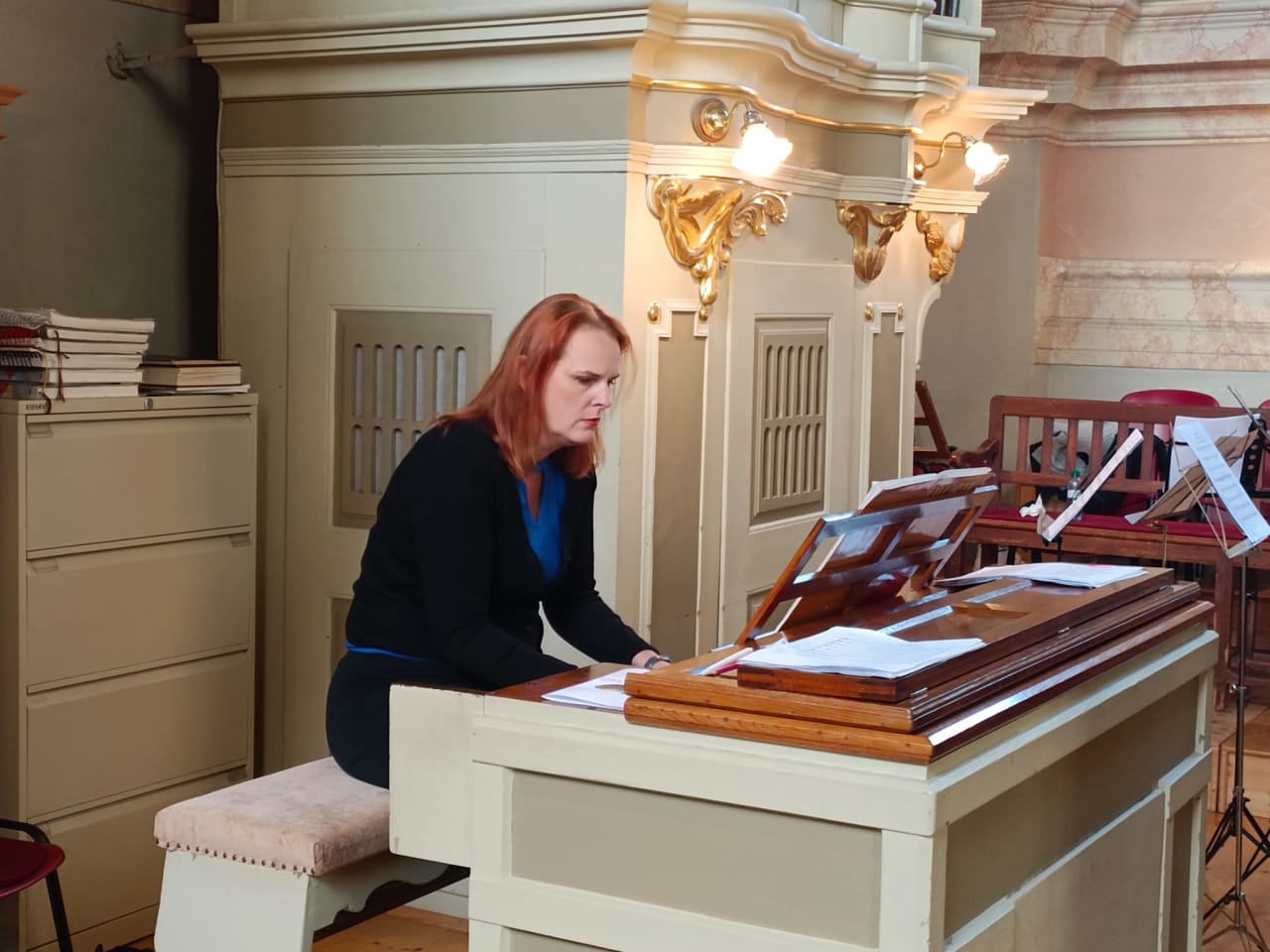
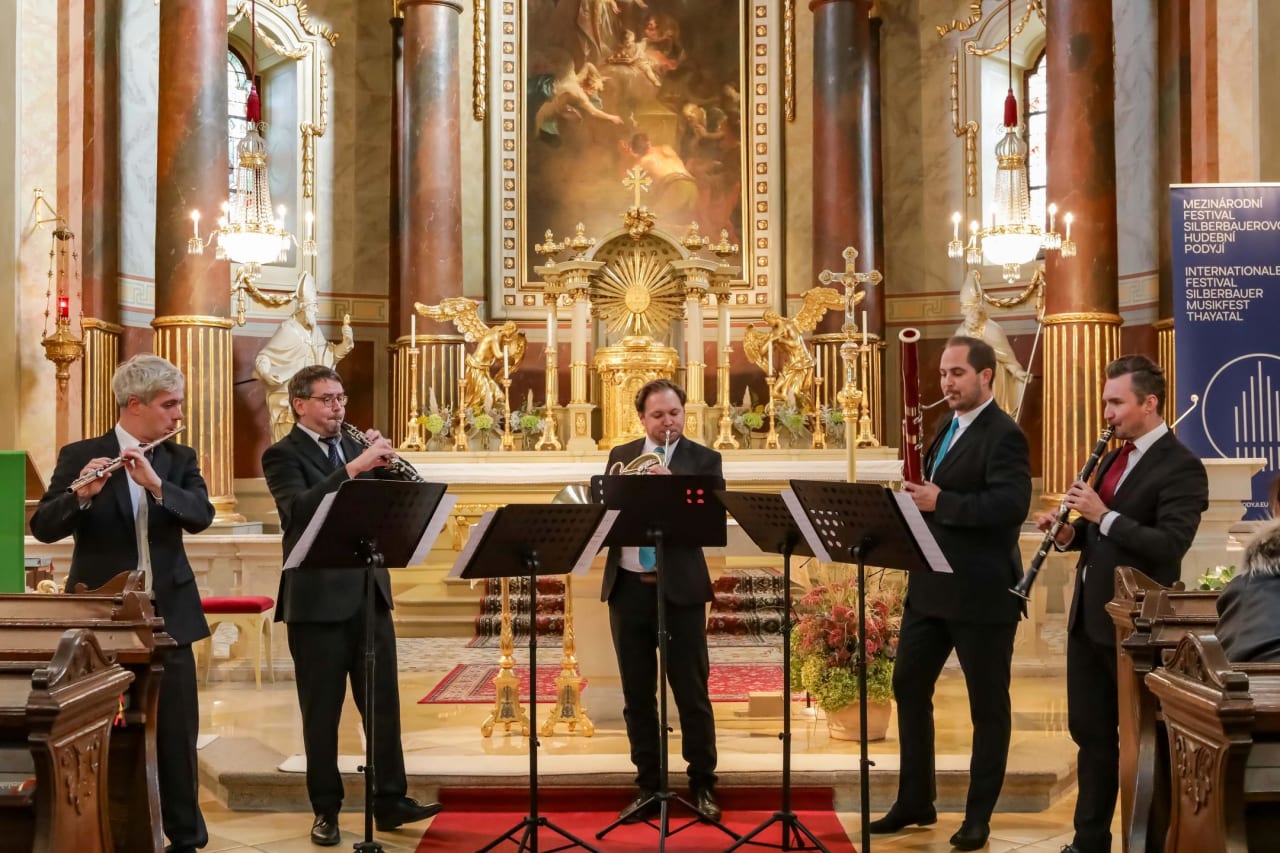
Performed by the Belfiato Quintet, a leading Czech wind quintet, and Kateřina Málková on the organ.
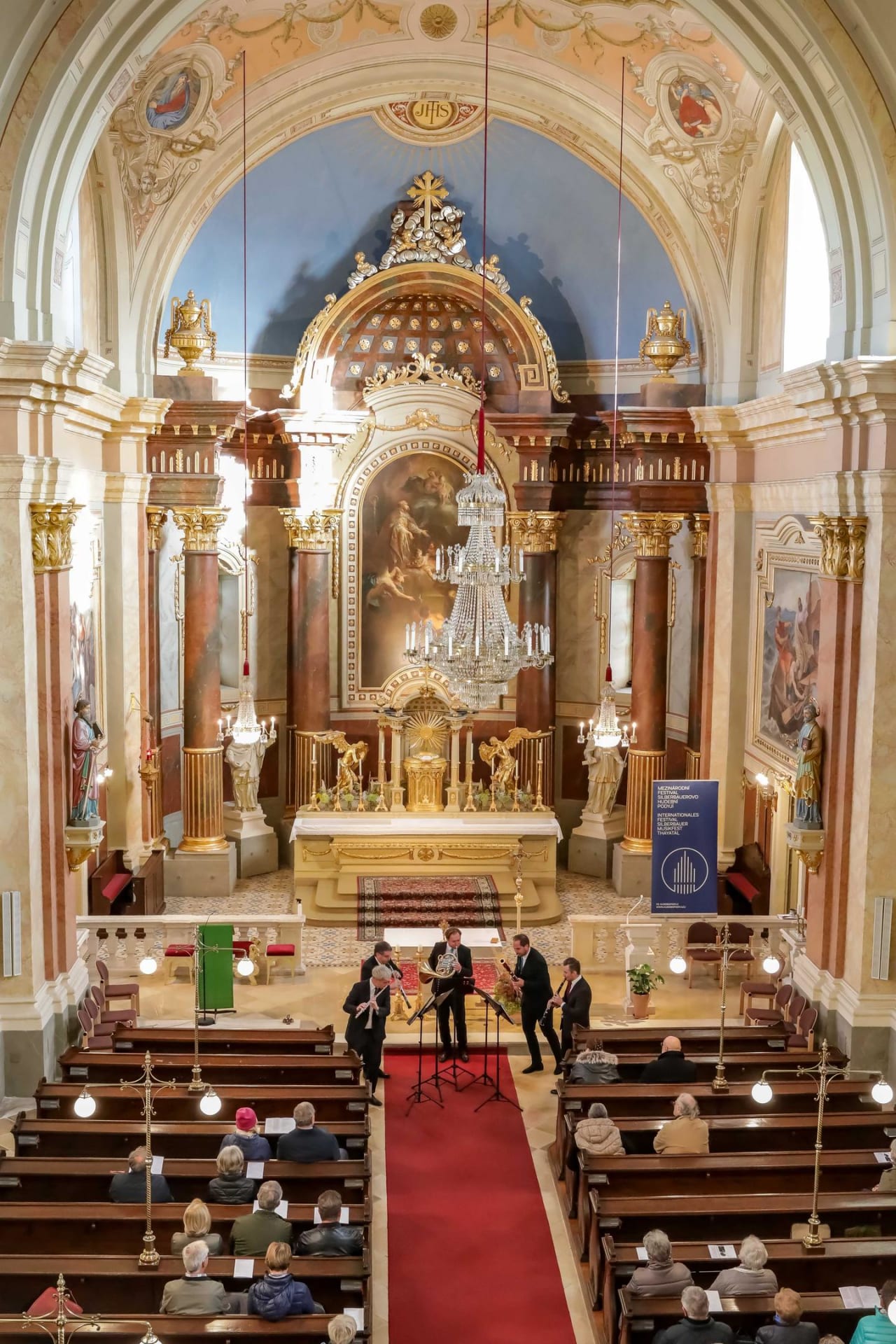
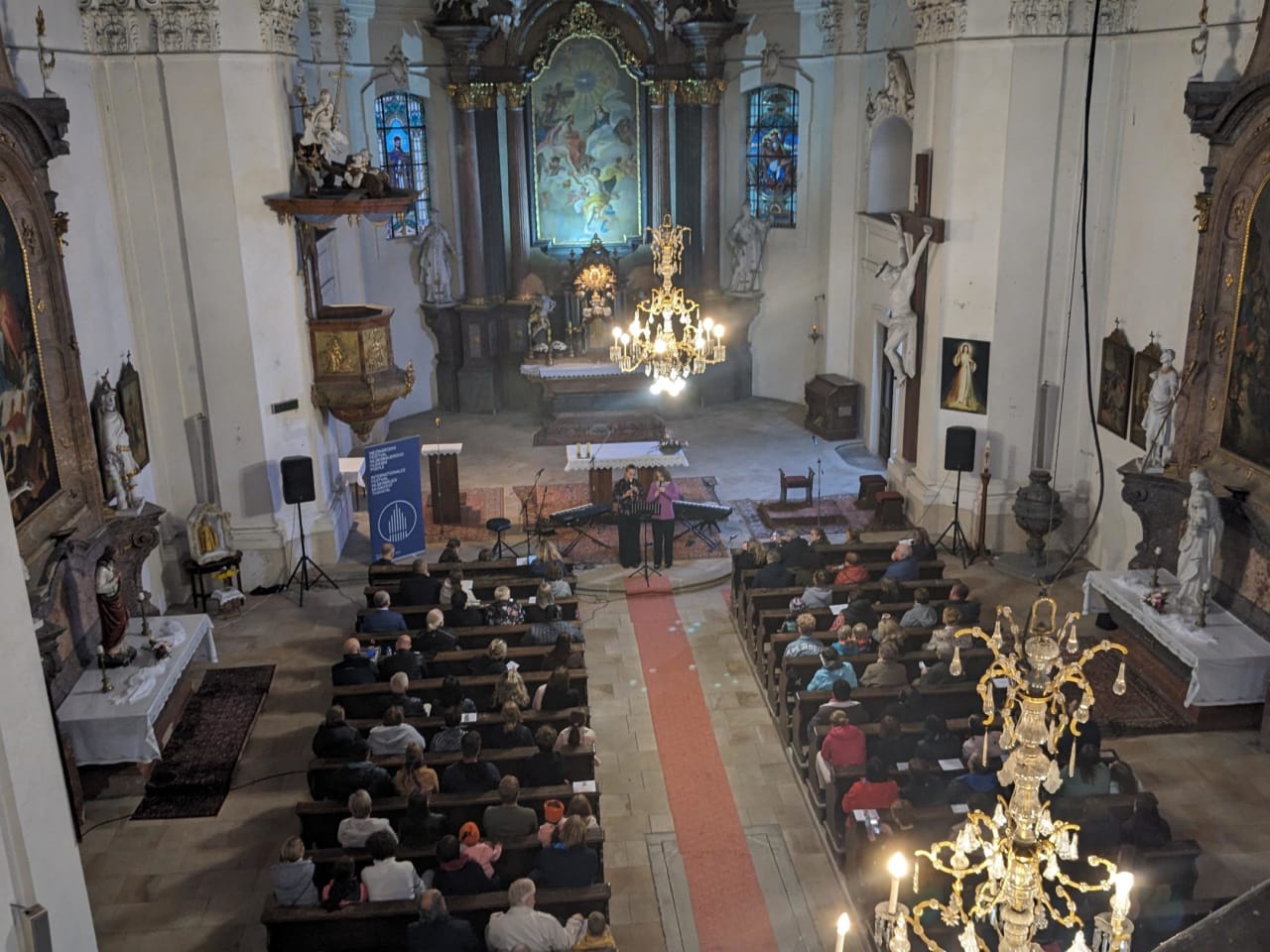
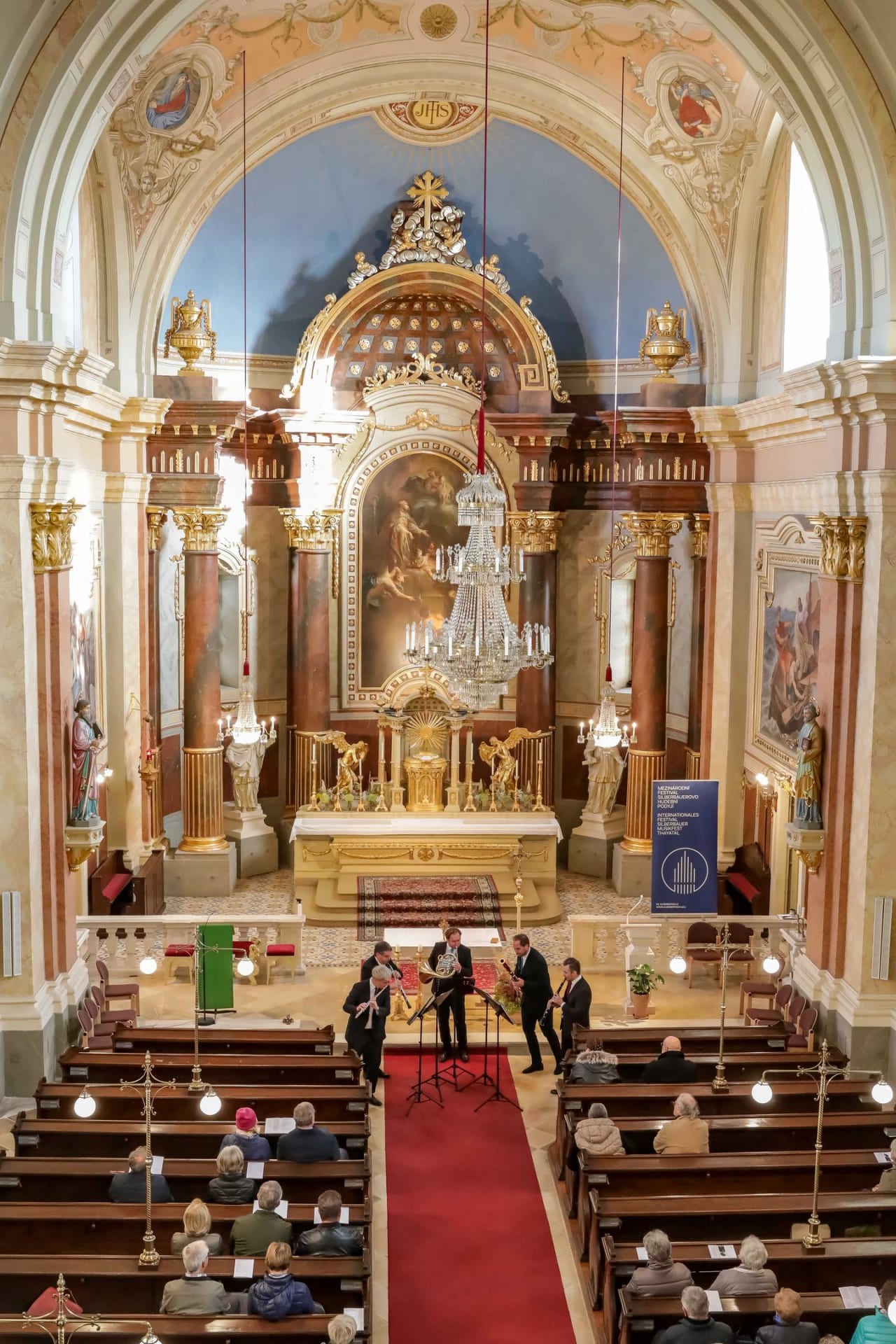
The concert takes place in the Church of St. Nicholas in Röschitz, Lower Austria. A historic Roman Catholic church, its history dates back to 1198 and it was rebuilt in the late Baroque style between 1768 and 1782.

Künstler
- Winners of the International ISA Rejcha Competition, laureates of the Henri Tomasi Competition, and holders of the Czech Chamber Music Society Prize and the Classic Prague Awards, the Belfiato Quintet is the most prominent Czech wind quintet of its generation. Despite the young age of its members, the ensemble will soon celebrate its twentieth anniversary. The ensemble is composed of leading players from the most important Czech orchestras: the institutions where the “Belfiati” work, play, and draw inspiration include the Czech Philharmonic, the National Theatre, and the PKF – Prague Philharmonia. They are also sought-after soloists, whose individual awards from the ARD in Munich, the Prague Spring, and Concertino Praga underscore the ensemble’s prestige and guarantee an unforgettable experience at every concert, whether in the Czech Republic or abroad. As the resident ensemble of Supraphon, the Belfiato Quintet has already released three albums under this label, which have been highly praised by critics. Their latest album, “Elements” from 2021, received a pre-nomination for the prestigious Anděl Award.
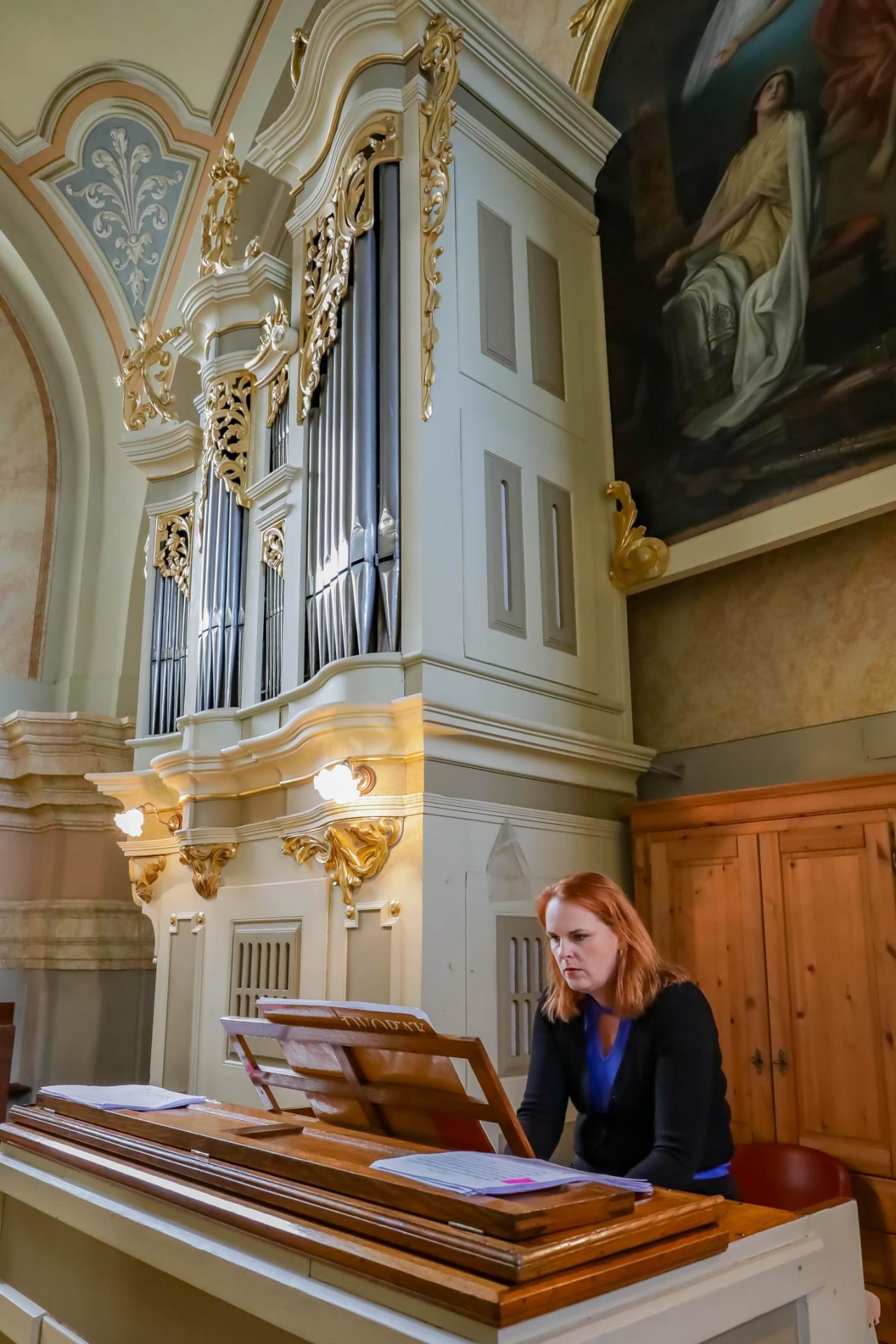
- She is the founder of the Opus Organum association, which strives to promote and in the future restore organs, primarily from the Znojmo organ school. This activity is followed by the creation of the Silberbauer’s Musical Thaya Region festival, of which she is the director and dramaturge. The aim of the festival is to musically connect the Czech and Austrian border regions, with the purpose of the future restoration of valuable instruments by the organ builder Josef Silberbauer. Kateřina Málková is a promoter of mainly Baroque works, but also of contemporary composers. She always tries to find new places with lesser-known instruments and is dedicated to their promotion to the general public. She organises a number of concerts both in South Moravia and in Lower Austria. In addition to her solo concert career, she is also active as a teacher. She has performed at festivals in Austria, Slovakia, Switzerland, Germany, Latvia, Lithuania, and other countries. She collaborates with orchestras such as the Czech National Symphony Orchestra, the North Czech Philharmonic, the Atlantis Orchestra, the Collegium Magistrorum, the Bohuslav Martinů Philharmonic, the Sedunum String Orchestra, and others. She studied organ at the Brno Conservatory in the class of Petr Kolař, and then continued with a master’s degree at the Academy of Performing Arts in Prague with Jaroslav Tůma. During her studies, she completed a one-year foreign internship in Lübeck, Germany, with Arvid Gast.
Entritt
Voluntary admission
Programme
(1871–1942)
Rondo
(1854–1928)
arr. J. Pelikán
(1841–1904)
(*1972)
PREMIERE
(1841–1904)
(1841–1904)
arr. D. Walter
(*1984)
PREMIERE
Fotogallerie
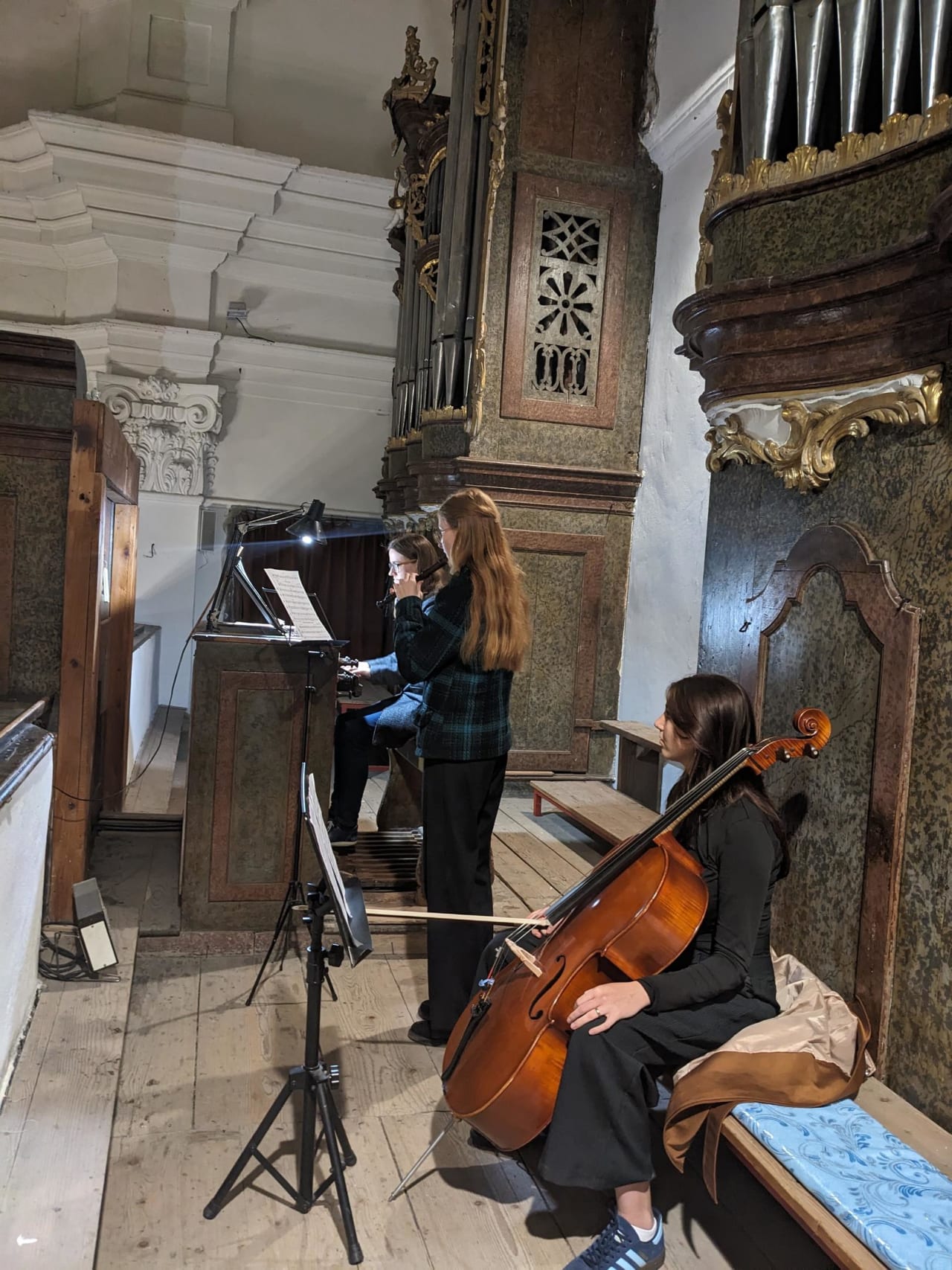
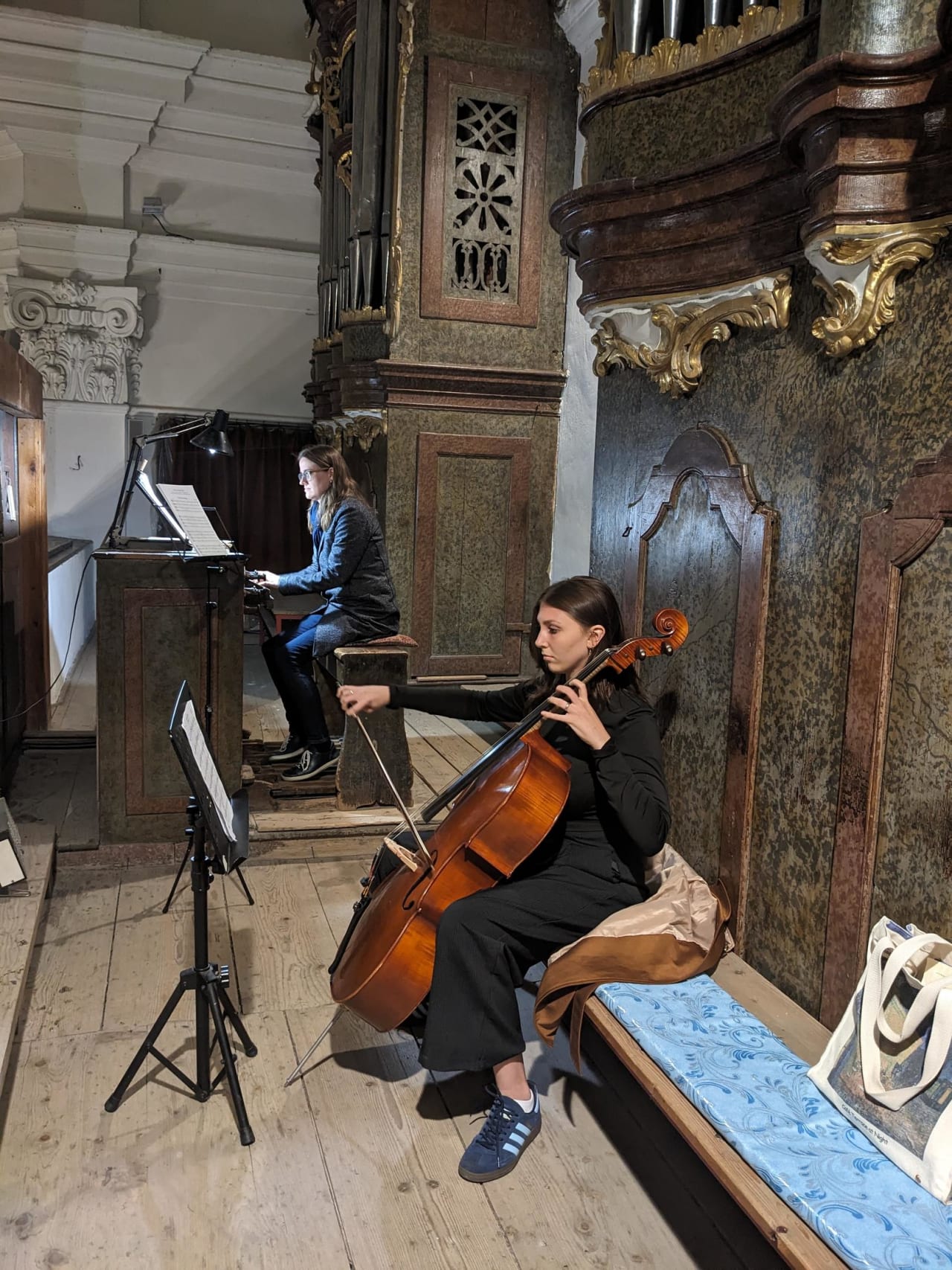
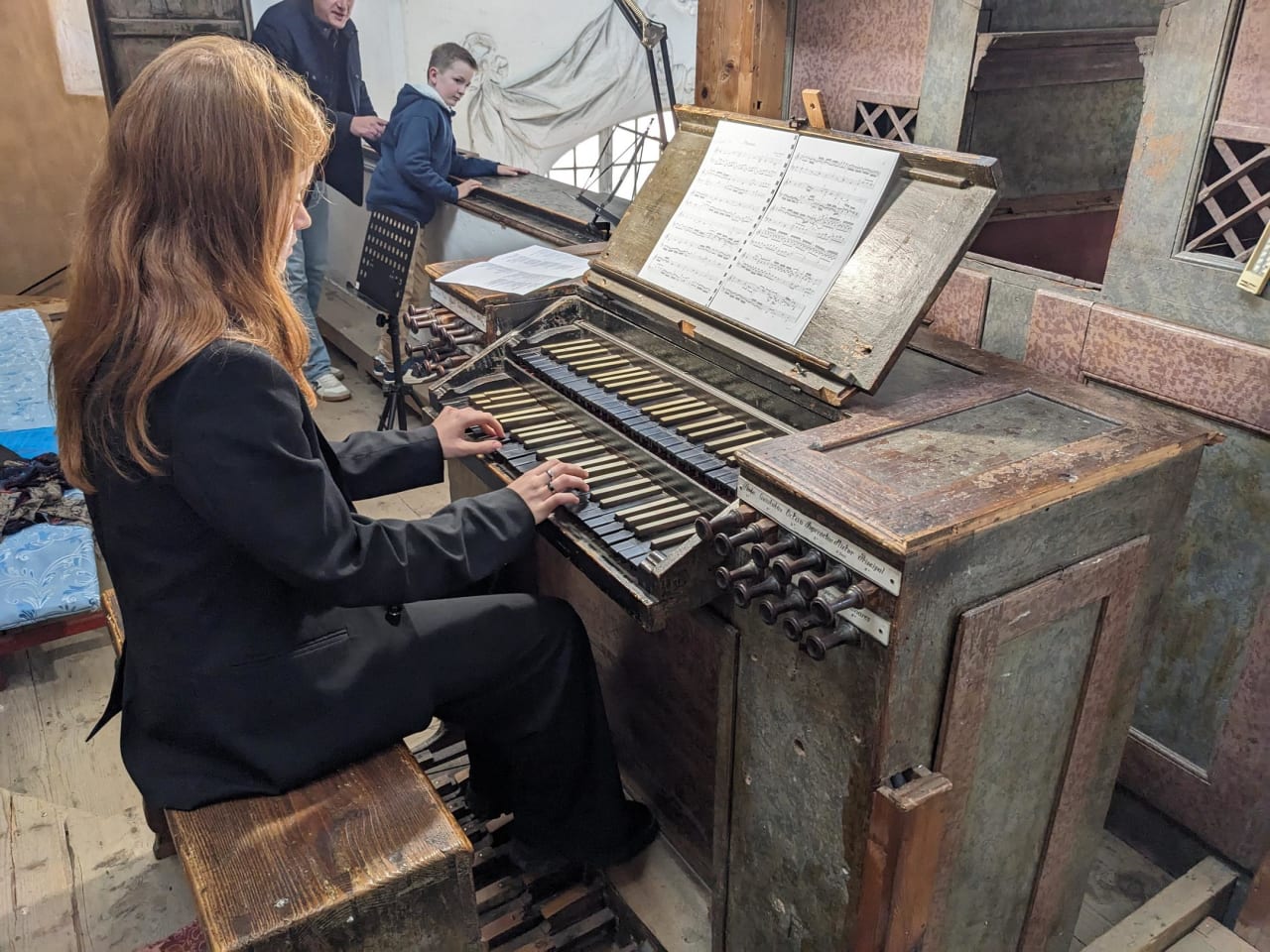
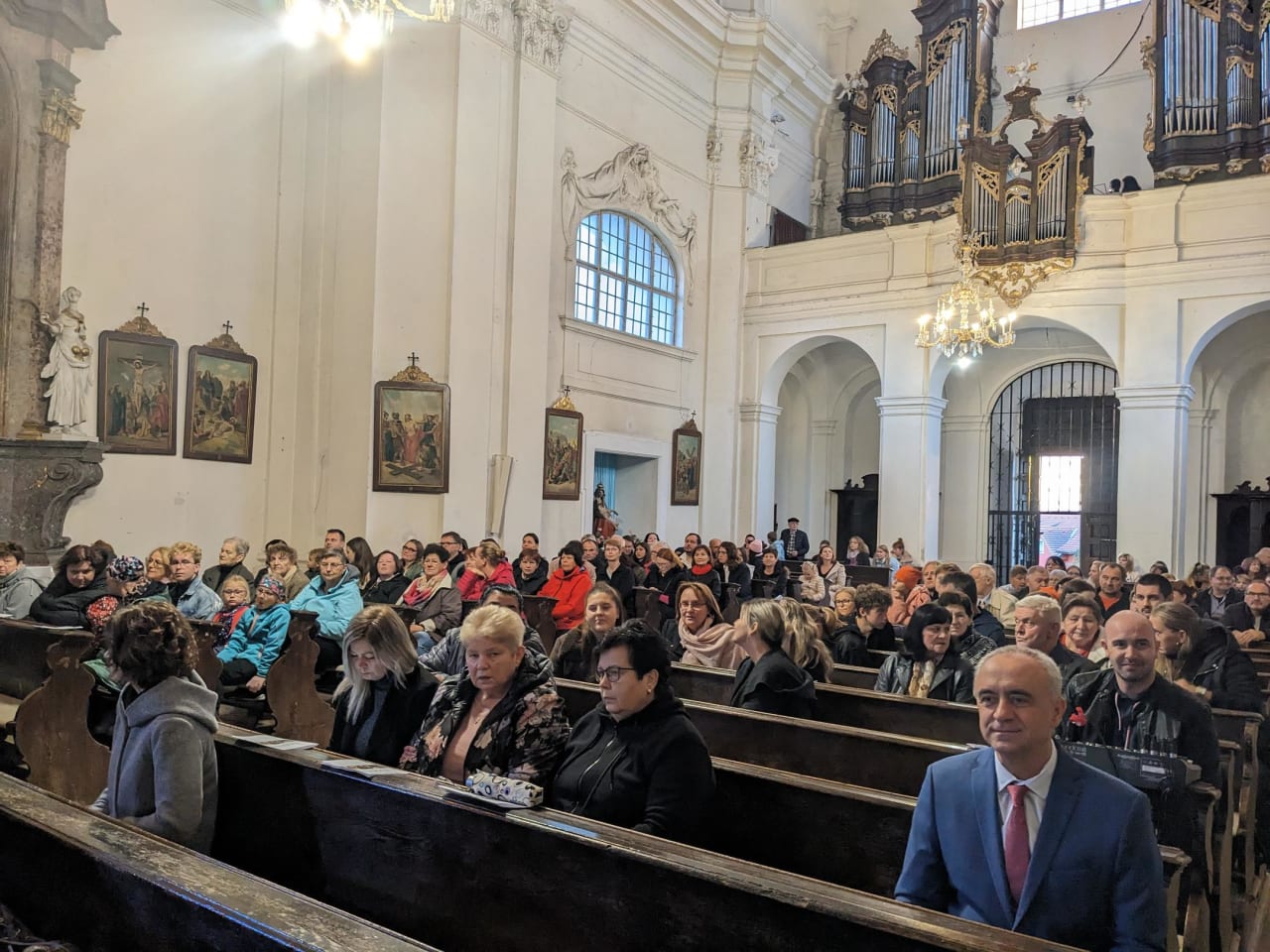
Ort
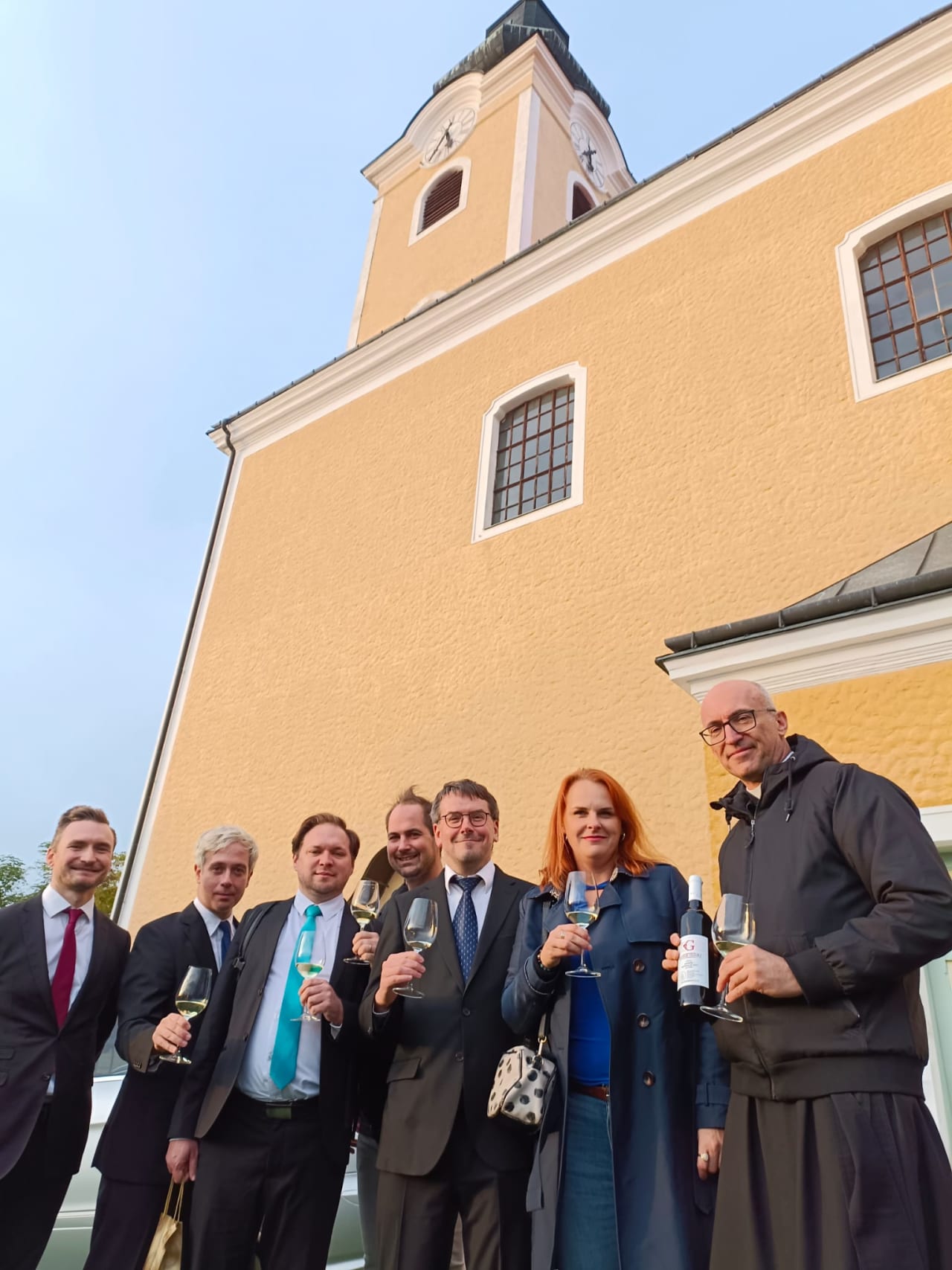
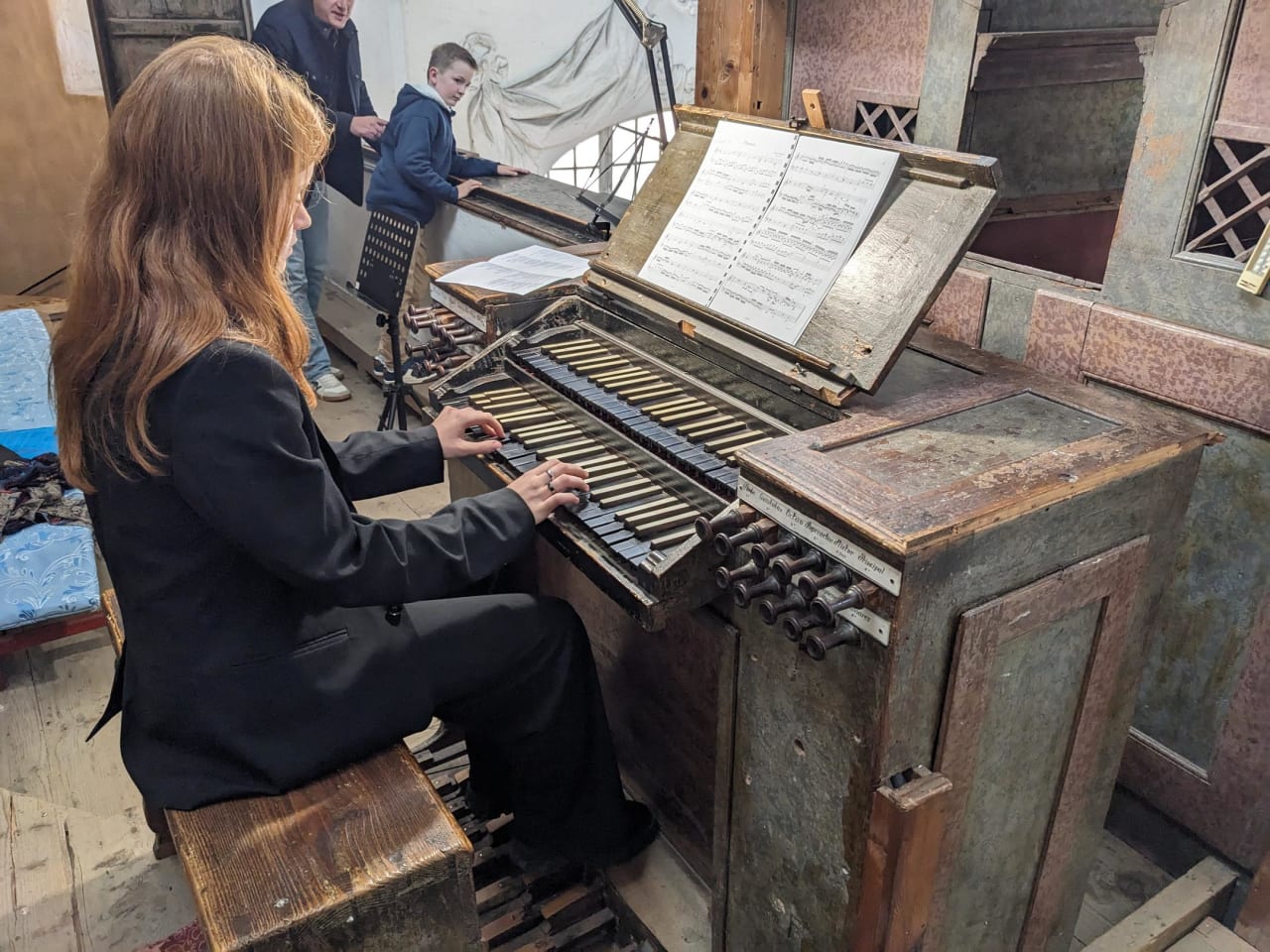
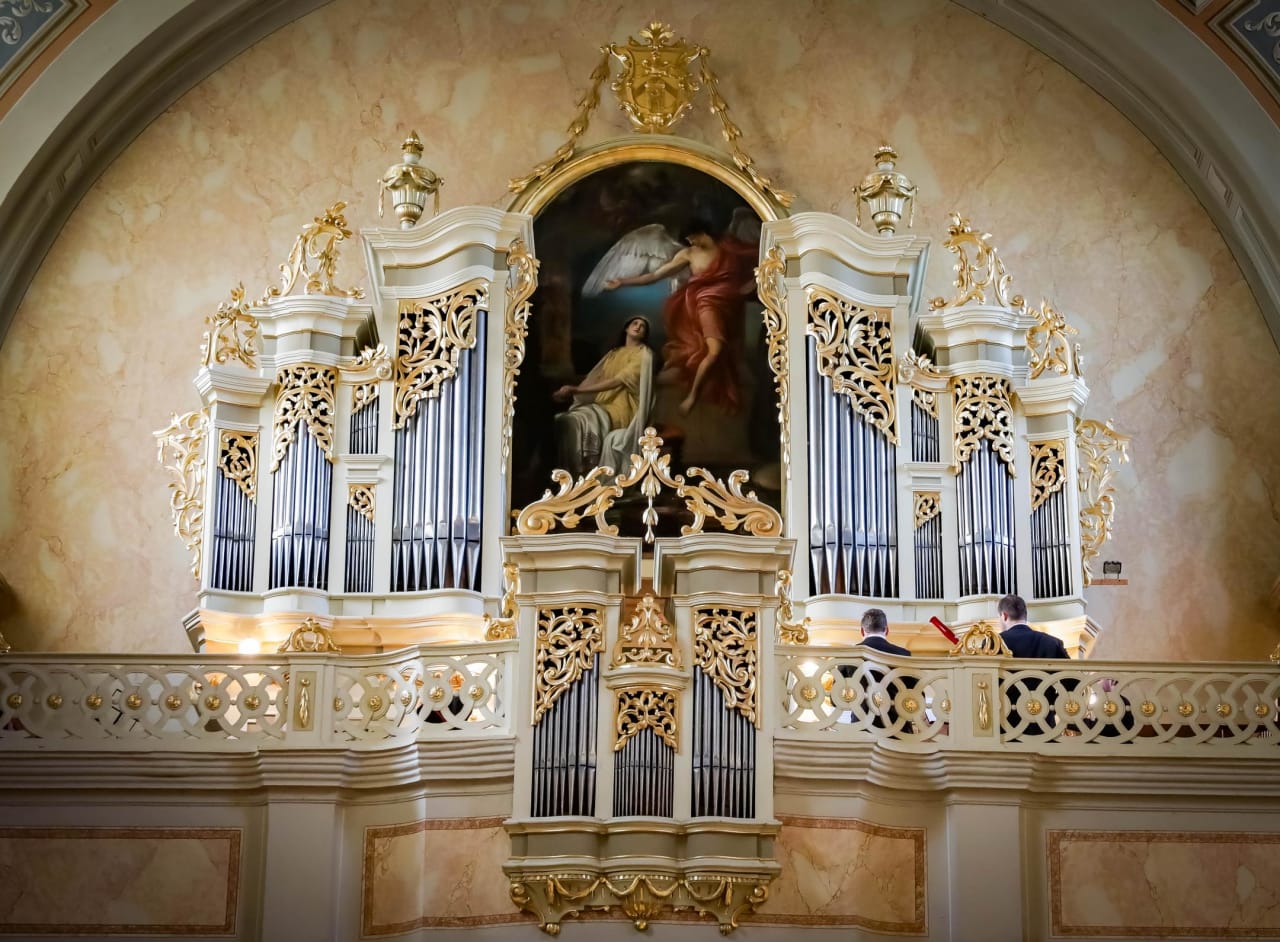
The Parish Church of St. Nicholas in Röschitz, Lower Austria, is a historic Roman Catholic church, part of the Sitzendorf deanery, and is protected as a cultural monument. The church’s history dates back to 1198, when Röschitz was first mentioned in writing. In 1648, the church, along with many other buildings in the village, was destroyed during the Thirty Years’ War. A new church was subsequently built between 1768 and 1782 under the direction of the master builder Leopold Wißgrill. Architecturally, the church is late Baroque with a tower on the west side. The interior decoration is Baroque-Classical from around 1780, with neo-Baroque paintings from 1888/89 by Franz Xaver Schönbrunner. A significant feature is also the historic organ from 1787 by Josef Silberbauer, which has been restored several times over the years.
Back to all concerts