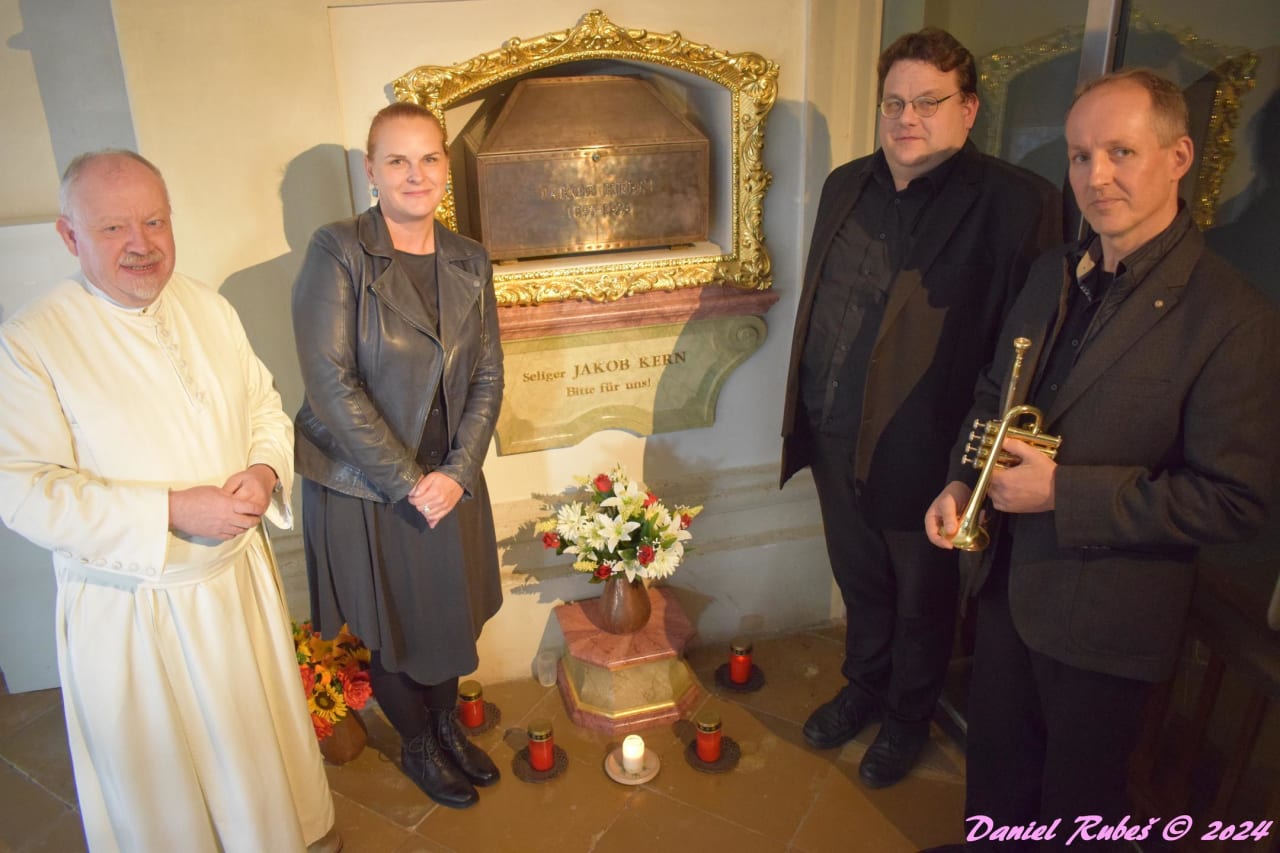
In Honour of the 100th Anniversary of the Death of Blessed Jakob Kern
<div class="alert alert-warning" role="alert">Will take place on the alternative date of 29th September 2024</div>
Sunday, 29. 9. 2024 at 15:00
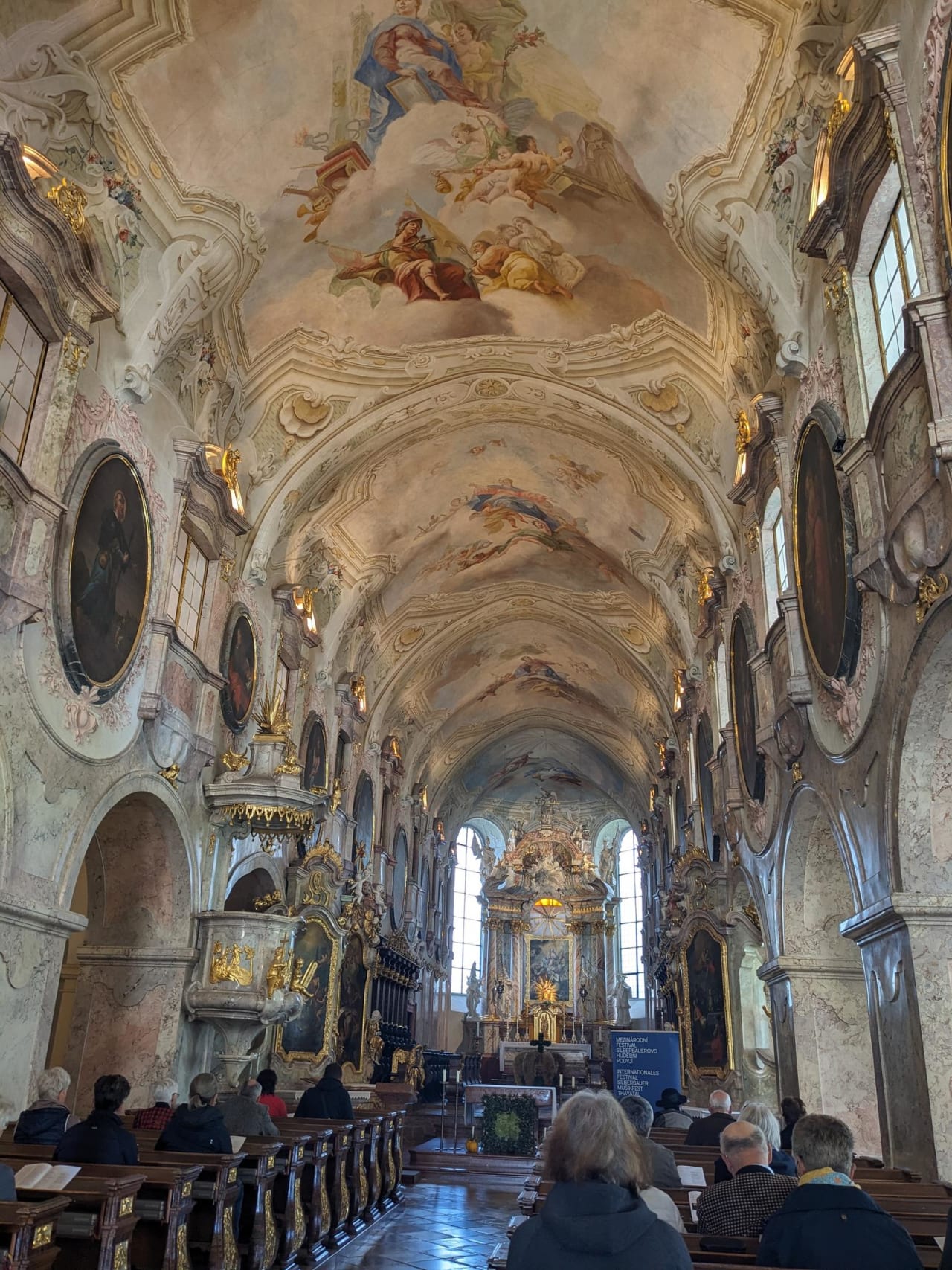
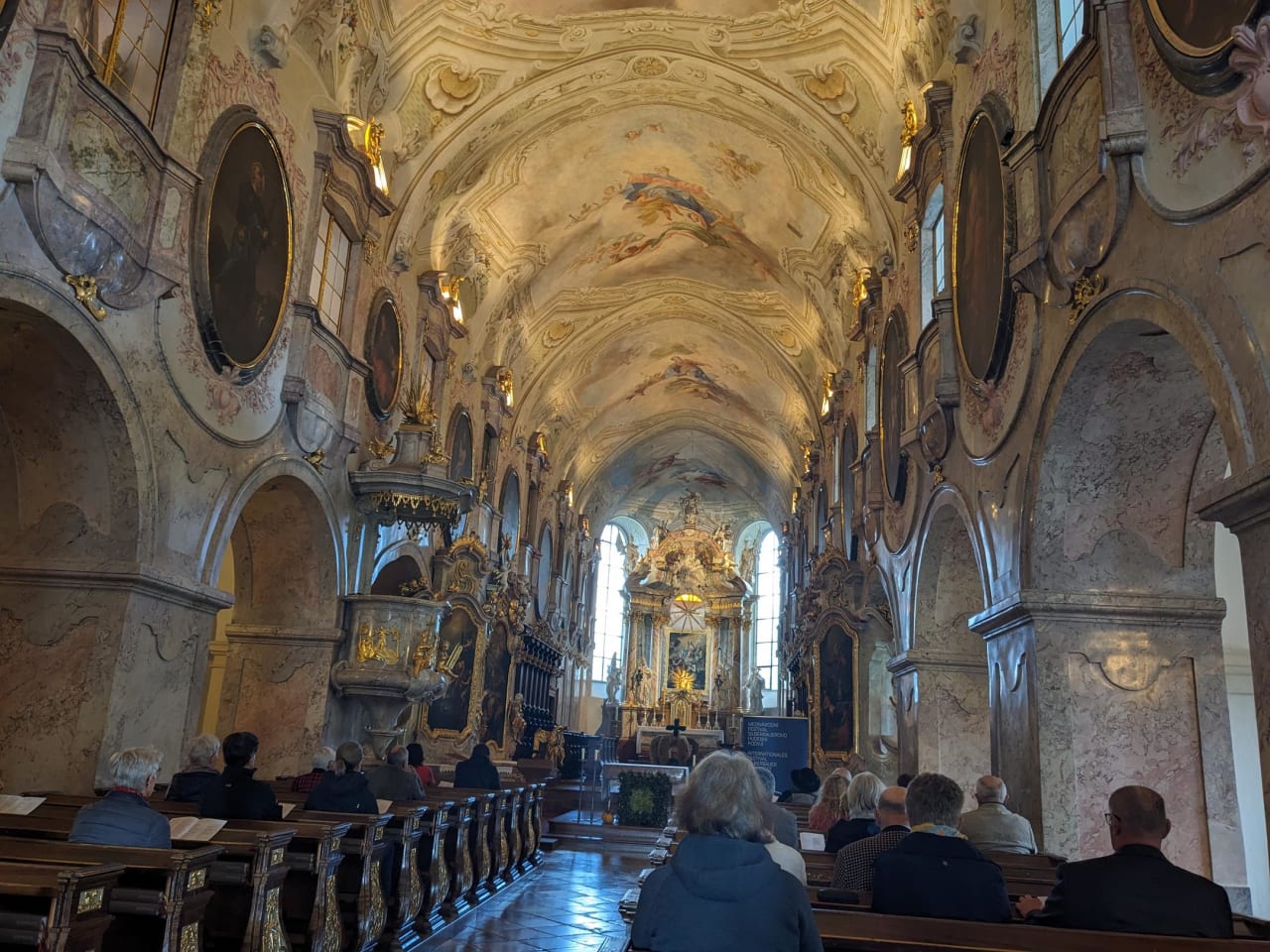
Monastery Church
Geras Abbey
The programme includes works by Johann Gregor Albrechtsberger (1736–1809), Josef Lipavský (1772–1810), Johann Ernst Eberlin (1702–1762), Pavel Josef Vejvanovský (1639/1640–1693), and others. A highlight is the inclusion of the chant “Salve Regina” by an anonymous composer and a work by Bohuslav Matěj Černohorský (1684–1742).
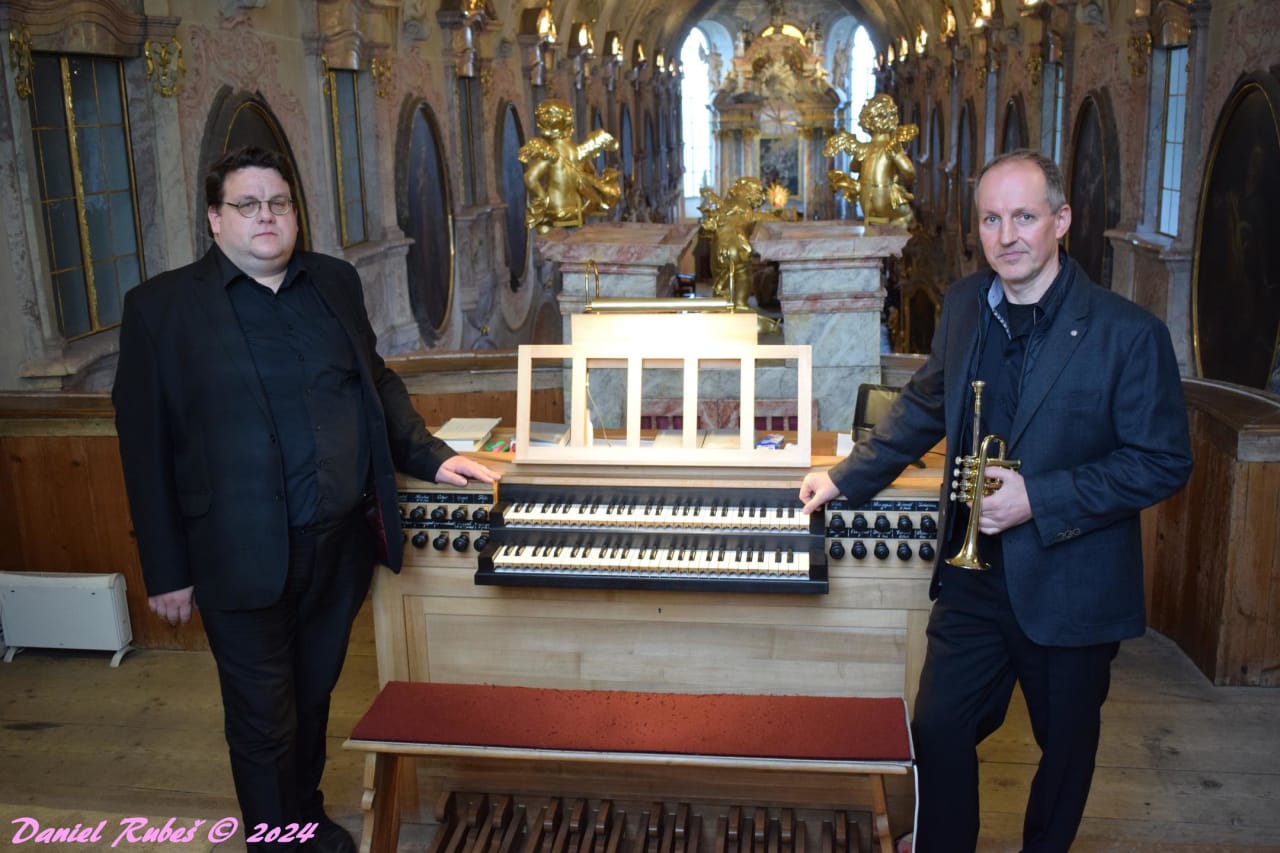
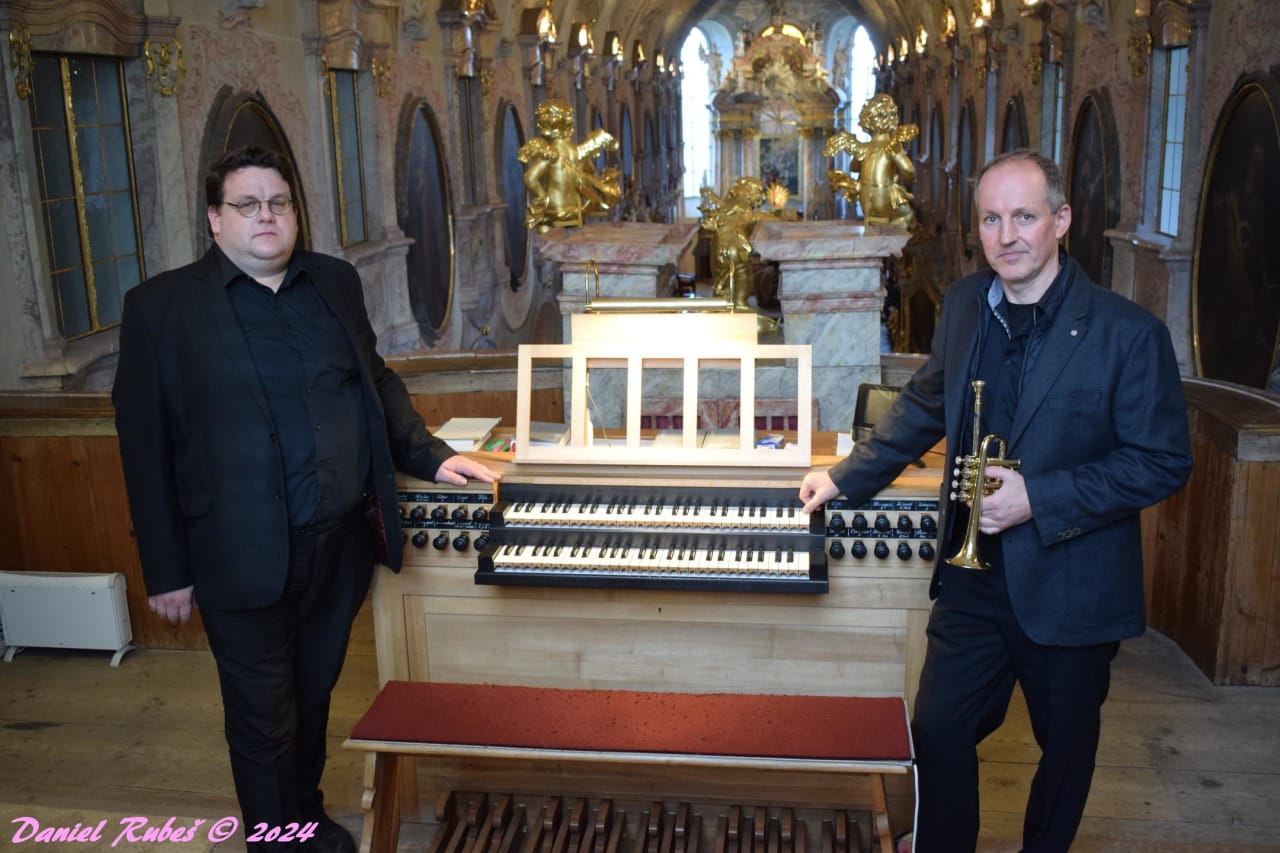
Pavel Hromádka on trumpet and Jan Gottwald on organ and positive organ will perform.
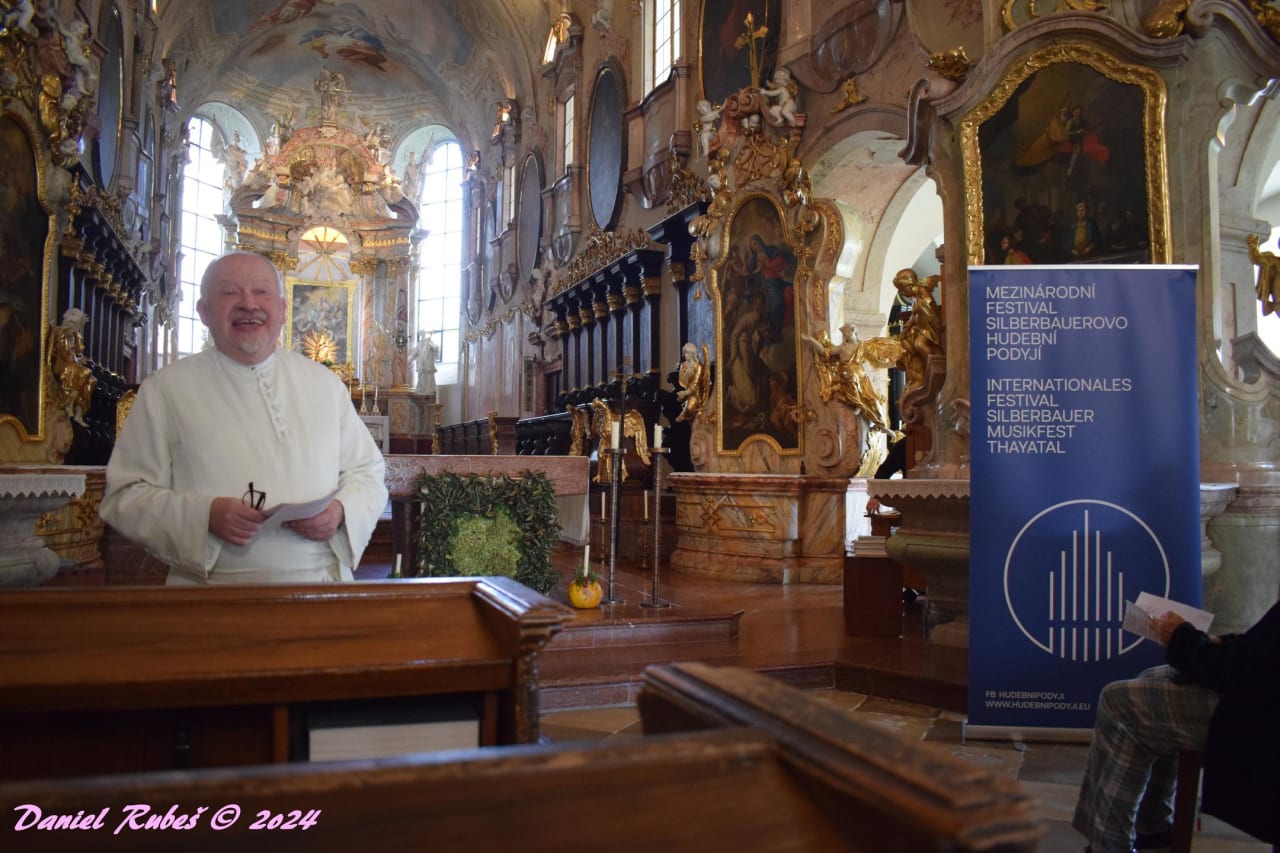
The concert takes place in the monastery church of Geras Abbey. The monastery, founded in 1153, has a rich history and is known for its Marble Hall with frescoes by Paul Troger.
Veranstaltung auf Facebook
Künstler
- A native of Mořkov in Wallachia, he began playing the trumpet at the age of eight. In 1982, Pavel won 2nd place in the national round of the Primary Art School competition, and in 1985, he won first place. After his studies at the vocational school in Tatra Kopřivnice, he definitively set out on a musical path. He first studied at the Janáček Conservatory in Ostrava with Professor Emanuel Holub and subsequently at the Janáček Academy of Music and Performing Arts in Brno under the guidance of Jan Broda. In addition to these studies, he also completed international interpretation courses in Lübeck (Germany) with Reinhold Friedrich. Pavel Hromádka is a laureate of several interpretation competitions, namely the Competition of Conservatories – 3rd place, the Amati Kraslice Interpretation Competition – 1st place, and also the Prague Spring International Interpretation Competition, where he advanced to the 2nd round. He was a member of the Janáček Philharmonic Ostrava, the Central Band of the Ministry of the Interior in Ostrava, and is currently a soloist with the Prague Castle Guard Band, where he also serves as the leader of the chamber ensembles and ensures their participation in state ceremonies and full-length concerts. He is a sought-after chamber and solo player. He founded the Lašské Brass Quintet and the Prague Castle Guard Band Quintet. Since 1997, he has been a member of the Baroque Trio chamber association of soloists, in the line-up of trumpet-oboe-organ, with which he has already released three CDs. As a soloist, he has performed with the Janáček Philharmonic Ostrava, the Moravian Philharmonic Olomouc, and the Janáček Chamber Orchestra. He also performs with various big bands and brass orchestras. Pavel Hromádka regularly gives concerts in the Czech Republic and abroad (Slovakia, Poland, France, Belgium, the Netherlands, Israel, Jordan, China, USA).
- He has been involved in music since childhood, thanks to his artistic family background. He studied at the music-aesthetic section of the Slavic Grammar School and piano and organ at the Žerotín Primary Art School with Dr. Reginald Kefer and Vladimír Sobotka, a leading Czech organist who focuses on the so-called stylistic interpretation of Baroque music. At the conservatories in Brno and Ostrava, he studied organ, piano, harpsichord, conducting, choir directing, and singing. He then continued his studies in musicology and theology at Masaryk University in Brno and Palacký University in Olomouc. He has participated in a number of international master organ courses (M. Sander, R. Smits, and others). Since 1995, he has been active in Olomouc as a performing artist: a concert and church organist (1995-2010 at St. Philip and St. James in Nové Sady, 1997-2006 at St. Maurice, and since 2012 as regenschori of the Papal Basilica Minor of the Visitation of the Virgin Mary on Svatý Kopeček near Olomouc, under the care of the Premonstratensians), a choirmaster and conductor (KPS Dvořák Olomouc, St. Cecilia Choir and Orchestra Olomouc, Chorus Marianus Tršice, MPS Křížkovský, the Slavic Grammar School Choir, and others), a composer, organologist, arranger, organiser, music dramaturge, and accompanist (Moravian Theatre in Olomouc). He regularly collaborates with a number of artistic ensembles dedicated to the revived premieres of Czech, Moravian, and Austrian figural music of the 17th–19th centuries and to the informed interpretation of music in general (Musica Figuralis, Ensemble Damian, Ars Brunensis Chorus, and others). He performs in concert both at home and abroad (Austria, Germany, Switzerland, France, Italy). He is currently a secondary school teacher at the Slavic Grammar School in Olomouc, a teacher at the Žerotín Primary Art School, and at the Cathedral Educational Centre of the Olomouc Archdiocese, where he also serves as the archdiocesan organologist and a member of the Sub-commission for Liturgical Music of the Archdiocese of Olomouc. At the National Heritage Institute in Telč, he participated in the documentation of historical organs in the department of musical monuments and as a member of various organological commissions, for example, for the construction of the organ in St. Vitus Cathedral in Prague.
Entritt
Voluntary admission
Programme
(1736–1809)
(1772–1810)
(*1982)
Tonus solemnis
(1702–1762)
(1639/1640–1693)
(1739–1813)
(1736–1809)
(1685–1750)
choral, BWV 147
(*1982)
(1770–1836)
no. 20, op. 36
(1656–1746)
Musicalischer Parnassus
Choral
(1684–1742)
(1706–1784)
Fotogallerie
Ort
Geras Abbey was founded in 1153 as a daughter monastery of Seelau by Ekbert and Ulrich of Pernegg and was settled by the Seelau Canons. The monastery has a rich history, which includes its destruction during the war between King Ottokar II Přemysl and Rudolf of Habsburg in 1278, its plundering by the Hussites between 1419 and 1436, and its occupation by the Hungarians in 1486. In the 18th century, the monastery underwent a series of reconstructions and extensions under the direction of Abbot Nikolaus Zandt, who brought in important artists such as Joseph Munggenast and Paul Troger. Architecturally, the monastery is known for its Marble Hall with a magnificent fresco by Paul Troger, a library with frescoes by Josef Winterhalder, and a number of other works of art. The Abbey Church, the main church of the monastery, is a Romanesque basilica that was later Gothicised and, in the 18th century, Baroqueised.
Back to all concerts