Monastic Musical Meditation
Sunday, 9. 10. 2022 at 16:00
Abbey Church
Geras Abbey


Künstler
-
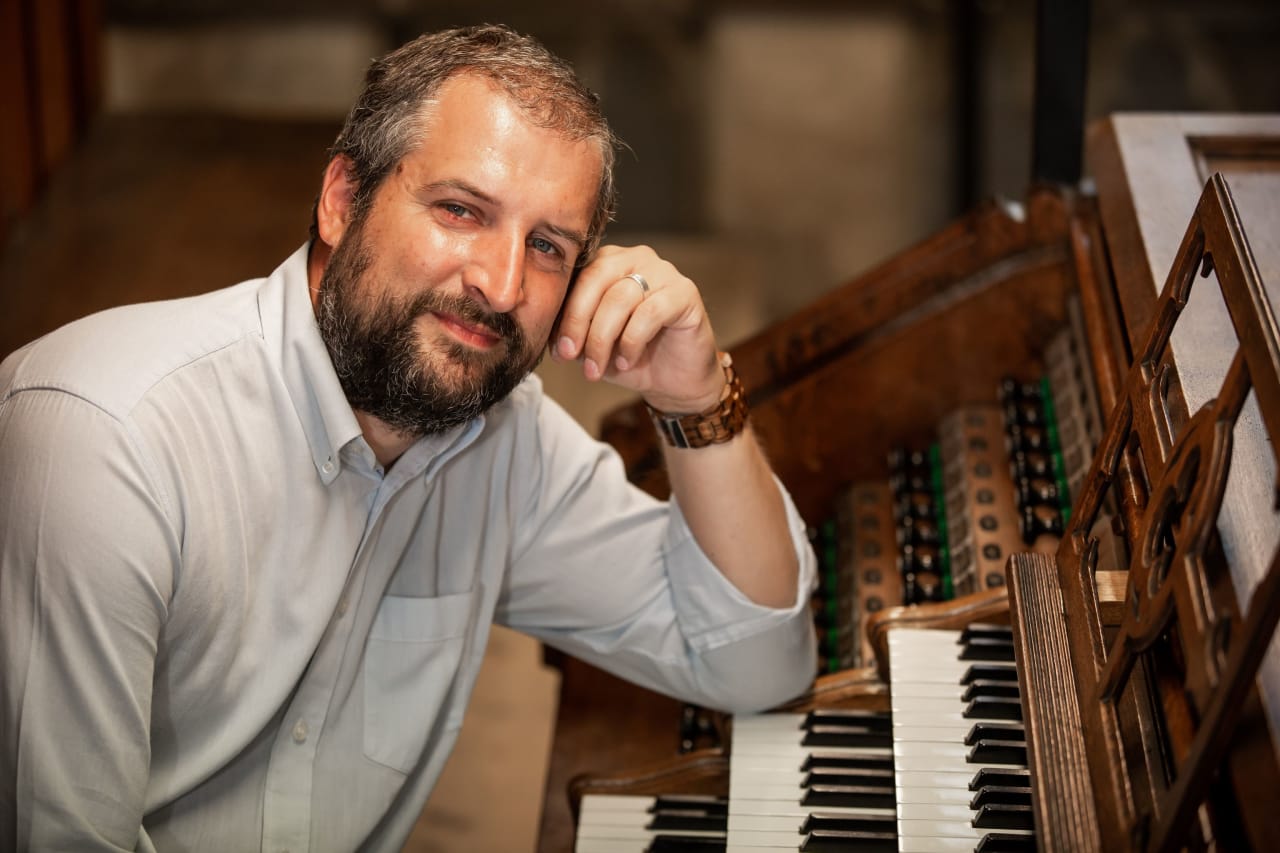
Karel Martínek was born and lives in Olomouc. He first studied mathematics and physics at the Faculty of Science of Palacký University, and later musicology at the Faculty of Arts. From 2004 to 2009, he studied organ at the Janáček Academy of Music and Performing Arts in Brno under Prof. Kamila Klugarová and organ improvisation with Prof. Karel Pokora.
During his studies at the academy, he actively participated in a number of interpretation courses led by leading world organists, such as Susan Landale, Martin Sander, Günther Kaunzinger, Julian Gembalski, Reitze Smits, Olivier Latry, Thomas Ospital, and others. At the same time, he participated in several interpretation and improvisation competitions (Prague Spring, Schwäbisch Gmünd). In 2014, he began to study improvisation under the guidance of Philippe Lefebvre, the titular organist of Notre-Dame Cathedral in Paris.
In addition to interpreting a wide range of organ literature, Karel Martínek also devotes himself to improvisation. In his hometown, he began to present thematic evenings inspired by biblical texts and combining organ improvisations with the spoken word. The impetus for creating this project was Petr Eben’s work "The Labyrinth of the World and the Paradise of the Heart" with texts by Jan Amos Comenius. Later, he launched the monumental project "The Organ Bible," in which he has been publishing improvisations on all the chapters of the Bible on the Internet since Advent 2012.
Martínek also taught organ improvisation from 2007 to 2009 at the Church Conservatory in Opava. He is currently a teacher of organ playing at the Conservatory of the Evangelical Academy in Olomouc and at the same time teaches organ playing and improvisation as part of his doctoral studies at the Janáček Academy of Music and Performing Arts in Brno.
From 1994 to 2008, he was the organist at St. Wenceslas Cathedral in Olomouc. From 2010 to 2019, he was the organist of the Church of St. Maurice in Olomouc, where he had at his disposal the famous instrument by Michael Engler. He is currently working again at St. Wenceslas Cathedral in Olomouc, since October 2020 as choirmaster and organist. In the Olomouc churches, he is also involved in the organisation of the International Organ Festival as its artistic director and dramaturg.
Karel Martínek regularly collaborates with major Moravian musical ensembles such as the Moravian Philharmonic Olomouc, the Bohuslav Martinů Philharmonic Zlín, the Žerotín Academic Choir, the Campanella choir, and others. He has recorded several CDs for Czech and American publishers and has contributed musically to the creation of several documentary films for Palacký University.
In addition to organ interpretation and improvisation, he also composes. In addition to works for solo organ, he has created several works for piano and works for choir and orchestra, some of which have been awarded prizes in composition competitions.
Karel Martínek gives concerts at home and abroad (France, Italy, Poland, Slovakia, Austria, Germany, the Netherlands, Finland, Sweden, Ukraine, Lebanon). As part of his concert tours, he has performed in major European churches, such as Notre-Dame Cathedral in Paris, the Cathedral in Turin, St. Stephen’s Cathedral in Vienna, and others.
-
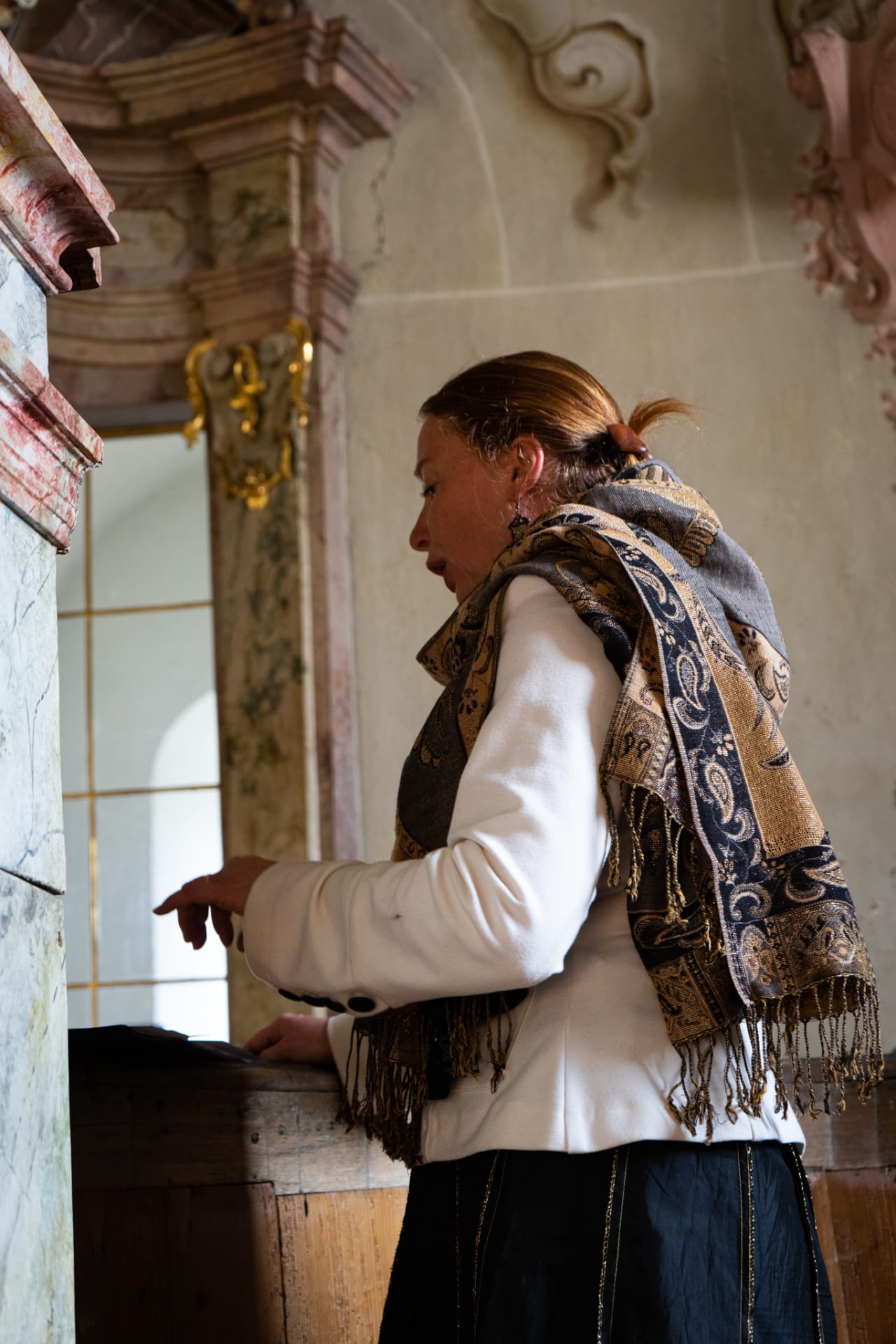
Coloratura soprano Markéta Israel Večeřová studied singing at the Faculty of Education of Palacký University in Olomouc and furthered her studies in numerous interpretation and master classes. As a soloist, she has performed with the Moravian Philharmonic Olomouc, the Bohuslav Martinů Philharmonic Zlín, Musica Florea, Musica Figuralis, Capella Regia, and Hofmusici. She is a founding member of the Ensemble Damian, with which she performs scenic and chamber works, especially by contemporary and Baroque composers. She regularly performs in the Czech Republic and abroad at international festivals and representative events (Opera Prague festival, Brno New Music Exposition, Prague Contemporary Music Marathon, Pounding the Iron Opera at the National Theatre in Prague, Czech Touches of Music, the Baroque Opera and Oratorio series - Prague Symphony Orchestra cycle, Třebíč Opera Festival, Hradec Králové Music Forum, Theatrum Kuks, Bezruč’s Opava, Other Shores Opava, Janáček’s Hukvaldy, Forfest Kroměříž, Baroque Olomouc, Opera Schrattenbach, Ostrava Days of New Opera, etc.). Since 2006, she has been recording regularly for Czech Radio, and her singing has also been featured in several American films.
-
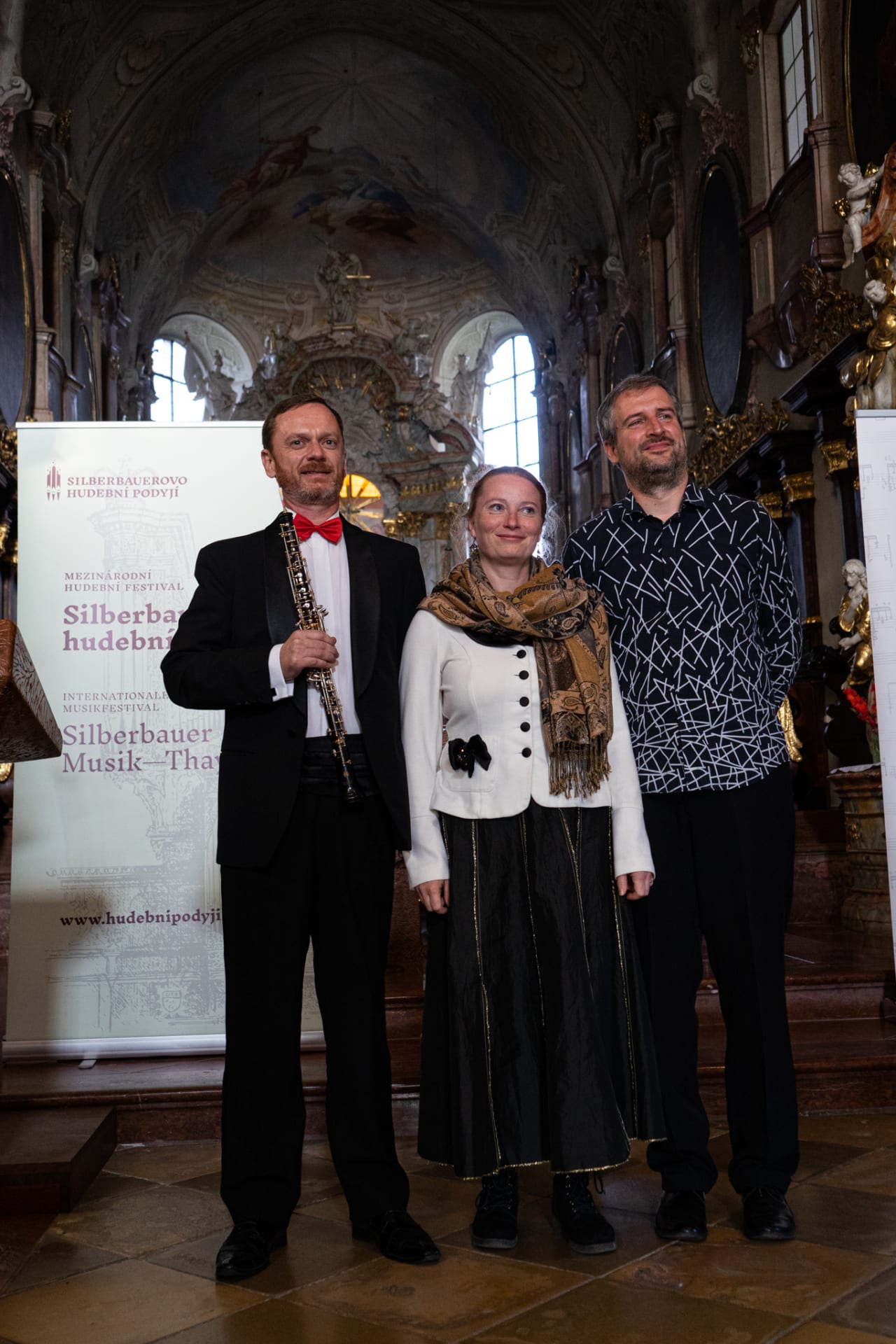
He studied oboe at the Pardubice Conservatory. After graduating, he became a member of the Moravian Philharmonic Olomouc, where he still works as the head of the oboe section. He has also worked in the opera and operetta orchestra of the Moravian Theatre in Olomouc and in the opera orchestra of the National Moravian-Silesian Theatre in Ostrava. He expanded his music-pedagogical education by studying at the Faculty of Education of Palacký University in Olomouc. In addition to playing in the orchestra, he is also involved in chamber music and is a member of the Moravia Quintet wind quintet. At the same time, he teaches oboe at the Šternberk Primary Art School. He has performed in concerts in many European countries, the USA, China, and Japan.
Entritt
Voluntary admission
Programme
(1704–1653)
Apparatus musico organisticus
(1653–1706)
(1562–1621)
(1751–1829)
(1685–1750)
Et exultavit - Quia respexit
(1685–1750)
(*1979)
improvisation
(1679–1745)
from the opera St. Wenceslas
(*1979)
improvisation
(1678–1741)
VI. Domine Deus
(1756–1791)
Exsultate, jubilate
Fotogallerie



Ort
Geras Abbey was founded in 1153 as a daughter monastery of Seelau by Ekbert and Ulrich of Pernegg and was settled by the Seelauer Chorherren. The monastery has a rich history, which includes its destruction during the war between King Ottokar II Přemysl and Rudolf of Habsburg in 1278, its sacking by the Hussites in 1419-1436, and its occupation by the Hungarians in 1486. In the 18th century, the monastery underwent a series of reconstructions and extensions under the direction of Abbot Nikolaus Zandt, who brought in important artists such as Joseph Munggenast and Paul Troger. Architecturally, the monastery is known for its Marble Hall with a magnificent fresco by Paul Troger, a library with frescoes by Josef Winterhalder, and a number of other works of art. The Stiftskirche, the main church of the monastery, is a Romanesque basilica that was later Gothicised and in the 18th century Baroqueised.
Back to all concerts